
Annual Report 2025-26

This annual report details the NIISQ Agency’s performance between 1 July 2025 and 30 June 2026.
It provides details about our financial and non-financial performance, documents information about our operating environment, organisational structure, governance and demonstrates how we deliver our statutory obligations and provide value to NIISQ participants.
This report has been prepared in accordance with the Annual report requirements for Queensland Government agencies (2025-26 reporting period), and the prescribed requirements of the Financial Accountability Act 2009, the Financial and Performance Management Standard 2019 and the National Injury Insurance Scheme (Queensland) Act 2016.
Annual Report 2025-26 (PDF, 1.8MB)
-
Accessing this report
Visit www.niis.qld.gov.au/news-and-research/annual-reports/ to view this annual report.
Copies of the report are also available in paper format. To request a copy, please contact us on the details below.
NIISQ Agency
GPO Box 1391, Brisbane Qld 4001
Phone: 1300 607 566
Email: enquiries@niis.qld.gov.au
Web: www.niis.qld.gov.au
ISSN: 2208 – 102X
Interpreter service statement
The National Injury Insurance Agency, Queensland is committed to providing accessible information and services to Queenslanders from all cultural and linguistic backgrounds. To talk to someone about this annual report in your preferred language, call 1300 607 566.
© The National Injury Insurance Agency, Queensland 2026
Licence: This annual report is licensed by the National Injury Insurance Agency, Queensland under a Creative Commons Attribution (CC BY) 4.0 International licence.
CC BY Licence Summary Statement: In essence, you are free to copy, communicate and adapt this annual report, as long as you attribute the work to the National Injury Insurance Agency, Queensland.
To view a copy of this licence, visit: http://creativecommons.org/licenses/by/4.0/
Attribution: Content from this annual report should be attributed as:
The National Injury Insurance Agency, Queensland annual report 2025-26.
-
8 September 2026
The Honourable David Janetzki MP
Treasurer, Minister for Energy and Minister for Home Ownership
GPO Box 611
BRISBANE QLD 4001The Honourable Ros Bates MP
Minister for Finance, Trade, Employment and Training
GPO Box 15483
CITY EAST QLD 4002Dear Treasurer and Minister
I am pleased to submit for presentation to the Parliament the annual report 2025-2026 and financial statements for the National Injury Insurance Agency, Queensland (NIISQ Agency).
I certify that this annual report complies with:
- the prescribed requirements of the Financial Accountability Act 2009, the Financial and Performance Management Standard 2019 and the National Injury Insurance Scheme (Queensland) Act 2016, and
- the detailed requirements set out in the Annual report requirements for Queensland Government agencies.
A checklist outlining the annual reporting requirements is provided on page 70 of this annual report.
Yours sincerely,
Gaenor Walker
Acting Chief Executive Officer
National Injury Insurance Agency, Queensland
-
This year has been one of growth, reflection and preparation for the future.
As the National Injury Insurance Scheme Queensland (NIISQ) approaches its 10-year anniversary in 2026, we have reached an important milestone for the Scheme. NIISQ has evolved from a new scheme into a mature and trusted part of Queensland’s support system for people who sustain serious personal injuries in motor vehicle accidents. While much has changed since 2016, our purpose remains the same: ensuring participants have access to the treatment, care and support they need to live meaningful and connected lives.
Every day, we see the resilience, determination and achievements of participants, their families and support networks. Their experiences continue to shape our thinking and remind us why our work matters. Whether someone is rebuilding independence, pursuing education and employment goals, strengthening community connections or achieving personal milestones, we remain committed to supporting participants at every stage of their journey. The impact of the Scheme is best measured not only through services delivered, but through the opportunities it creates and the lives it helps people lead.
As the Scheme continues to mature, it is important that we evolve alongside it. During 2025–26, we progressed significant organisational transformation, and this work has focused on positioning the Agency for the future by strengthening our operating model, building capability and creating greater clarity about how we deliver value for participants. While the work is ongoing, it represents an important investment in the long-term success of the Scheme and our ability to respond to changing participant needs and expectations.
A strong and sustainable Scheme requires more than good intentions. It requires thoughtful stewardship, responsible decision-making and a long-term perspective. Throughout the year, we continued to focus on ensuring the Scheme remains sustainable for current and future participants. This includes strengthening our planning and decision-making capability, improving how we use data and insights, and ensuring resources are directed towards achieving the greatest possible impact.
Sustainability is not simply about financial outcomes. It is about maintaining a Scheme that can continue to provide high-quality treatment, care and support for years to come.
This year also provided an opportunity to reflect on the importance of partnership. The success of NIISQ relies on the collective efforts of participants, families, service providers, researchers, advocates, government agencies and community partners.
Through these relationships we continue to learn, improve and identify new opportunities to enhance outcomes for the people we serve. The diversity of perspectives and expertise across our community remains one of the Scheme’s greatest strengths.
Looking ahead, the coming year represents a significant milestone as we celebrate 10 years of NIISQ. While anniversaries provide an opportunity to acknowledge achievements, they are also a chance to look forward. The needs of participants, advances in technology, evolving service models and new opportunities for innovation will continue to shape our future direction. We are committed to embracing these opportunities while remaining focused on what matters most: supporting participants to achieve their goals and live the lives they choose.
As we enter this next period of growth, I am confident that NIISQ is well positioned for the future. We have strong foundations, a clear sense of purpose and a talented team committed to making a difference. Most importantly, we have a community of participants, families and partners who continue to challenge us to improve and inspire us through their resilience and achievements.
Finally, I would like to thank everyone who contributes to the success of NIISQ. To our participants and their families, thank you for the trust you place in us and for sharing your experiences so openly. To our service providers, researchers, advocates and partners, thank you for your collaboration and commitment to improving outcomes. To our dedicated team, thank you for your professionalism, compassion and unwavering focus on participants. Together, we are building a strong foundation for the years ahead.
Gaenor Walker
Acting Chief Executive Officer
About us
-
The National Injury Insurance Scheme, Queensland (NIISQ) funds necessary and reasonable treatment, care and support for people who have sustained an eligible serious personal injury in a motor vehicle accident in Queensland, on or after 1 July 2016.
NIISQ is a no-fault scheme, meaning necessary and reasonable treatment, care and support can be funded regardless of who was at fault in the accident. The injured person must also meet all eligibility criteria outlined in the National Injury Insurance Scheme (Queensland) Act 2016 (the NIISQ Act) and the National Injury Insurance Scheme (Queensland) Regulation 2016 (the Regulation).
In line with the NIISQ Act, an eligible serious personal injury includes:
- permanent spinal cord injuries
- traumatic brain injuries
- multiple or high-level limb amputations
- permanent injury to the brachial plexus
- severe burns
- permanent blindness caused by trauma.
Under the NIISQ Act, the NIISQ Agency may fund necessary and reasonable treatment, care and support for eligible participants with the stated serious personal injuries. This includes funding the provision of services for:
- medical or pharmaceutical treatment
- dental treatment
- rehabilitation
- ambulance transportation
- respite care
- attendant care and support services
- aids and appliances
- prostheses
- educational or vocational training
- home or transport modifications.
People with eligible injuries enter the scheme as interim participants for up to two years and receive treatment, care and support funded by NIISQ to support their rehabilitation.
During this period, the NIISQ Agency is required to review the participant’s eligibility to remain in the scheme on a lifetime basis or to exit the scheme for various reasons.
Different eligibility criteria may apply for participants aged under 18 years.
-
The National Injury Insurance Agency, Queensland (NIISQ Agency) is responsible for assessing eligibility and arranging payment of necessary and reasonable treatment, care and support for NIISQ participants, as well as managing and monitoring the provision of these services.
As a Queensland Government agency, we work closely with a range of service providers across the state to use an evidence-based research and treatment philosophy that ensures participants in NIISQ have access to services that will provide them with the most benefit for their long-term health.
Our team benefits from an inclusive and collaborative environment, where staff are provided with opportunities to learn and adopt innovative and co-design techniques, and to suggest ideas that will help us deliver high-quality services for participants and excellence across all our business functions.
Under the NIISQ Act, our main functions are to:
- administer the scheme
- provide information to the community about the scheme
- monitor and review the operation of the scheme, including the treatment, care and support received by participants under the scheme
- conduct research and collect statistics about the scheme
- give advice and information to the Treasurer and the Insurance Commission about the administration, efficiency and effectiveness of the scheme
- provide support and funding for programs, research and education relevant to the treatment, care and support of participants in the scheme
- manage the fund that pays for the costs of providing necessary and reasonable treatment, care and support of participants in the scheme
- set investment objectives for the fund or part of the fund and establish investment strategies and policies to achieve the objectives
- keep a register of entities providing services under the scheme.
Partnership with workers’ compensation insurers
In 2016, the Workers’ Compensation and Rehabilitation Act 2003 was amended to make several changes to Queensland’s workers’ compensation scheme, including implementing the National Injury Insurance Scheme (NIIS) for work-related serious personal injuries connected with Queensland.
Consistent with the NIIS for motor vehicle accidents in Queensland, the NIIS for work-related injuries provides all eligible seriously injured workers with a lifetime statutory entitlement to treatment, care and support payments.
WorkCover Queensland has provided workers’ compensation insurance in Queensland since 1997 and works closely with the NIISQ Agency to support people with serious personal injuries.
Under an agreement with WorkCover Queensland and other workers’ compensation self insurers, we have been entrusted to perform their functions and exercise their powers in assessing necessary treatment, care and support requirements.
The NIISQ Agency has provided this service to 143 eligible workers.
We engage with WorkCover Queensland and other Queensland workers’ compensation self insurers to facilitate:
- a close partnership with the worker, their family and/or informal supports, as well as the medical and allied health team, to support independent living, a successful rehabilitation and where possible, a durable return-to-work outcome
- awareness for potential eligibility with key hospital and rehabilitation personnel to ensure eligible workers are referred as early as possible
- support for workers and their families through any referral process to the NIISQ Agency
- identification and/or coordination of any return-to-work opportunities that deliver realistic and sustainable return-to-work outcomes for the injured worker.
NIISQ participants and injured workers benefit from our extensive network
We partner with other government agencies, including Queensland Health, to ensure participants are well-supported throughout their recovery journey. Our strong working relationship with hospitals assists with discharge planning, ensuring a smooth transition for participants returning home from hospital.
We value the input and advice of our trusted stakeholders and actively participate as members of interjurisdictional groups of government lifetime care schemes to ensure we exchange ideas and learnings while also contributing to innovative and evidence-based practices.
NIISQ participants, injured workers, their families and support systems are our focus in providing high-quality services throughout their journey with NIISQ. We support their understanding while they navigate their adjustment to life-changing injuries by providing information and assistance wherever possible. We have also worked closely with First Nations experts and disability advocacy groups to ensure we are assisting participants in an accessible and culturally safe way.
-
Our purpose
We boldly lead our scheme to ensure participants have access to services and supports that really matter to them.
Our vision
The right support at the right time making a difference to people’s lives.
Our strategic objectives
The following principles underpin our work to ensure we are providing the best service possible:
- participants access the right supports when they need it
- participants and stakeholders have confidence in the Scheme
- a highly engaged team that strives for excellence.
Our strategic risks
We manage our key strategic risks, which relate to:
- inability of the Agency to respond appropriately to unethical practices and fraud
- inability to respond proactively to external forces and economic pressures for Scheme sustainability
- inability to protect the Agency’s core information assets against cyber attacks or data breaches
- inability to provide a flexible, future-ready work environment to protect the wellbeing of our workforce and ensure excellence in service delivery.
Our opportunities
We are also committed to leveraging opportunities to:
- develop a future-ready workforce that consistently delivers high-quality services to participants
- improve partnerships and co-design initiatives with stakeholders to deliver better Scheme outcomes
- adopt proactive digital technologies and data capabilities to ensure Scheme sustainability
- influence and invest in key health initiatives to improve outcomes for seriously injured people.
This work aligns with our Strategic Plan 2022–2026 (see page 66).
Our values
The Queensland Public Service values aim to articulate the Queensland Government’s vision of a high-performing, impartial and productive workforce that puts the people of Queensland first. These public service values were adopted by the Agency as a statutory body and Queensland public sector entity and now underpin our values-based team culture D.R.I.V.E.S.:
- Deliver with passion and purpose
- Respectful and responsible
- Improve through curiosity and creativity
- Value learning and growth
- Empathy and empowerment
- Safety and support.
Queensland public service values
- Customers first
- Ideas into action
- Unleash potential
- Be courageous
- Empower people.
Queensland Government objectives for the community
The NIISQ Agency continues to deliver and support the Queensland Government’s objectives for the community, prioritising health services when you need them.
We provide funding for essential treatment, care, and support for those seriously injured in a motor vehicle accident on a Queensland road.
As a no-fault scheme, NIISQ covers costs regardless of who caused the accident, provided the injured person meets all eligibility criteria as per the NIISQ Act and Regulation.
People
-
The strength and commitment of our people and our valued stakeholders helps us to achieve our vision of delivering the right support at the right time making a difference to people’s lives.
We strive to provide a safe, inclusive and respectful workplace that values feedback and constructive conversations, and that ignites innovation and collaboration across all facets of our work.
Our values
The Queensland public sector values underpin our team values and the way we go about our work. All employees are expected to maintain the highest ethical standards and conduct themselves in a way that reflects these values, policies and statutory obligations.
Code of conduct
We are meeting our obligations under the Public Sector Ethics Act 1994.
While we operate in accordance with the wider Queensland Government’s policies, we also have an established NIISQ Agency Code of Conduct for employees (the code), which underpins how we operate within the NIISQ Agency. Each staff member is introduced to the code as part of their initial introduction to the NIISQ Agency team, and it is readily available to all staff to read whenever required.
The code highlights our commitment to ethical practices and reaffirms our rights as employees within the Queensland Government.
Industrial and employee relations
The NIISQ Agency is a public sector entity as defined in the Public Sector Act 2022.
We are an employing entity covered by the Queensland Public Service Officers and Other Employees Award (2015), as well as the State Government Entities Certified Agreement 2023 (core agreement) and subsequent replacement agreements.
The NIISQ Agency encourages and maintains strong engagement with the Together Union, including required consultation about significant organisational change, workforce policies and employment matters.
Nil formal disputes arose during the 2025–26 period.
Two formal employee grievances were lodged during the 2025–26 period.
Committed to excellence
Recruitment
Our commitment to becoming an employer of choice will continue to shape and sustain the NIISQ Agency workforce into the future.
During the 2025–26 year, the NIISQ Agency recruited talented and committed people to a range of roles that will continue to deliver an improved and sustainable service model for the Scheme.
We also continued to develop and strengthen an inclusive internal culture through the culture immersion program and playbook which highlights our values. We strengthened programs to attract, support and retain diverse talent, including through our student/graduate recruitment and staff wellbeing programs.
Onboarding
The NIISQ Agency onboarding experience is a vital component of our approach to support and retain great people. We welcomed new employees by sharing important information about the NIISQ Agency, our workplace and culture, to enable a comfortable transition into their new roles and for their ongoing success.
In 2025–26 we launched additional and updated online learning modules in our learning management system (LMS) to support mandatory and role-based training for new and existing staff. The LMS provides managers and staff with flexible access to essential training that new starters need to undertake within their first few weeks with the NIISQ Agency.
We have made improvements to our employee onboarding and offboarding experiences. This included further automation workflows and employee experience surveys to support joiners, leavers and supervisors.
Professional development
Personal learning and development opportunities through the Study and Research Assistance Scheme (SARAS) and attendance at relevant training courses and industry conferences continued to be encouraged.
Regular employee and supervisor feedback discussions and peer case review processes were also maintained.
To complement traditional methods of learning, throughout the 2025–26 period our highly skilled staff participated in other capability building and knowledge sharing initiatives, such as:
- team showcases
- lunch and learn discussions
- trauma-informed practice training
- health, safety and emergency response training
- first aid officer training
- health and safety representative courses
- ergonomics and Return to Work Coordination training
- Innovation Week activities.
During 2025–26, our learning and development programs were strengthened, with plans to further evolve the framework into 2026–27.
Our learning library was expanded to promote and encourage every employee to readily access self-paced, customisable professional development content.
Additionally, new management and leadership capability development programs were refreshed and continued to support new and emerging leaders in the Agency.
-
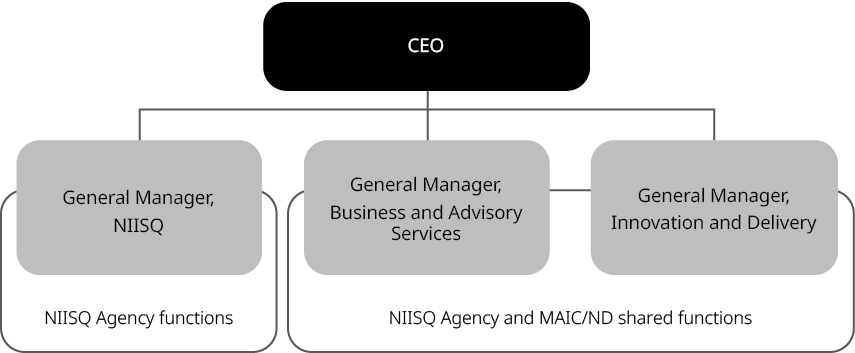
Our leadership team is committed to the delivery of our vision and strategic objectives, guided by our Strategic Plan 2022–2026 (see page 66). They foster a culture of inclusivity, collaboration and innovation across the NIISQ Agency, helping to ensure participant-centred services remain our core focus as we adapt to emerging challenges and opportunities.
Gaenor Walker
Acting Chief Executive Officer
B. OccTher, Grad Cert (Management)Gaenor Walker is a senior executive with over 20 years’ experience leading complex human service delivery across statutory insurance, health, and government systems. As A/CEO of the NIISQ Agency, she leads the delivery of integrated, person-centred care while ensuring scheme sustainability and alignment with broader public policy.
Gaenor brings deep expertise in injury compensation, service design, and strategic governance, with a strong focus on outcomes, risk management, and system-wide collaboration. She has led key initiatives that balance participant wellbeing with sound insurance principles and contributes to the evolution of NIISQ through data-informed planning, cross-sector partnerships, and operational excellence.
Gaenor also holds the role of Acting Insurance Commissioner with the Motor Accident Insurance Commission.
Jacinta Draper
Acting General Manager, NIISQ
B. OccTher, Grad Dip (Management)Jacinta Draper is a senior executive with an extensive career leading multidisciplinary teams in both the public and private sector including over 20 years’ experience leading in personal injury insurance. As Acting General Manager of the NIISQ Agency, she leads the delivery of integrated, person-centred care for people living with serious injuries while ensuring scheme sustainability and alignment with broader public policy.
Jacinta brings significant knowledge and expertise in injury compensation, people leadership, service design and risk governance and is recognised as a collaborative and outcome-focused leader. With a focus on organisational engagement, she has successfully led service delivery transformation initiatives to drive the achievement of important strategic and social objectives.
Peter How
General Manager, Innovation and Delivery
Dip (Proj Mgt), B. Comm, Grad Dip (Commercial Computing), MBA, GAICDPeter has comprehensive executive leadership experience in government and private enterprise across a range of industries, with a particular focus on innovation and incubation, organisational performance, agility and growth.
He is also a qualified company director and board advisor. Peter’s energy, enthusiasm and ability are readily on show as leader of NIISQ Agency’s Innovation and Delivery team.
Robert McLean
General Manager, Business and Advisory Services
BCom/LLB (Hons), Grad Dip ICAA, Dip Fin PlanningIn his role, Robert leads a diverse range of corporate operational teams, encompassing finance, corporate governance, people and culture, procurement, business services and communications. A qualified accountant and member of Chartered Accountants Australia and New Zealand (CA ANZ), Robert brings over two decades of experience to his role. His career, which began in public practice, has spanned the Queensland workers’ compensation and nonprofit sectors, equipping him with an extensive understanding of the unique challenges these industries face every day.
Robert is deeply passionate about fostering a proactive team environment that supports the business through the delivery of high-quality services. Robert also holds the role of Acting Deputy Insurance Commissioner with the Motor Accident Insurance Commission.
-
Workforce profile
As at 30 June 2026, the total FTE for the NIISQ Agency, including both full-time and part-time employees and measured on a full-time equivalent basis in accordance with the Minimum Obligatory Human Resource Information (MOHRI) data is 143FTE. The FTE paid that fortnight was 137.5. The Agency maintained its core-funded and ongoing establishment of 156 permanent FTE positions from the previous financial year. This includes roles shared with the Motor Accident Insurance Commission and the Nominal Defendant under a tripartite corporate support services arrangement.
The workforce comprises a broad mix of roles and skills that both deliver and enable front-line support planning services to Scheme participants with a predominantly permanent workforce ensuring continuity of service. The permanent to temporary ratio of 23:1 reflects the Agency’s stability and long-term workforce planning. The Agency’s workforce is strongly represented by women who make up almost 80% of total staff. The NIISQ Agency remains committed to cultivating a diverse, inclusive and culturally safe workplace.
In 2025–26, the NIISQ Agency welcomed new employees and farewelled others with a permanent separation rate of approximately 8.5%, based on the average headcount of permanent and fixed term employees across the financial year. This represents a decrease in the permanent attrition rate by 4.9 percentage points compared to the 2024–25 period. It must be noted that the Agency’s small-sized workforce makes it susceptible to strong fluctuations in workforce data trends.
During this same period, no redundancy, early retirement or retrenchment packages were paid.
Our commitment to work/life balance
In 2025–26, the NIISQ Agency continued to adopt flexible work practices that support business needs, while supporting staff to create a healthy balance between work and personal commitments.
Flexible work options have remained popular, and most of our employees benefit from tailored arrangements such as hybrid work arrangements, flexible hours, flex-time accrual, or part-time work.
We align flexible work practices for employees with evidence-based approaches promoted by the Public Sector Commission.
Flexible work options are accessible to all staff, at every level of the NIISQ Agency.
Planning for the future
In 2025–26, we delivered key initiatives for improved participant outcomes, and set the strategic direction for the NIISQ Agency by reshaping Agency plans.
Moving into the future, ideas and innovations will help us further deliver system efficiencies that support sustainable growth. We will also continue to develop and leverage the capabilities of a diverse workforce, assisted by new technologies aligned to our new workforce strategy.
Capability framework
Leadership, culture and engagement
In 2025–26 we continued to deliver and evolve a range of tools and training to build our workforce capability with a particular focus on:
- safe and ethical use of AI
- trauma informed practice
- good management practice.
Our Agency-specific Management Program (MaP) continued to support current and emerging managers through a shared learning model.
In addition to contemporary, curated content, the program invited experienced leaders from across the business to contribute their expertise, creating opportunities for learning, connection and management development at all levels.
To support the Agency AI strategy, we developed and delivered a series of practical AI training sessions for employees. The training catered to varying levels of confidence and experience with AI technology, covering topics including Everyday AI, Prompting 101, Ethical, safe and responsible AI and Managing and leading in a world of AI.
Our focus on employee engagement and organisational culture remained strong throughout 2025–26. We continued our culture immersion program for new starters and used our online employee engagement hub to promote engagement and consultation opportunities.
Our robust onboarding and offboarding processes continued to yield positive feedback about the employee experience.
Increasing capability through our work
We strengthened our knowledge management practices to capture, share and grow our thinking in ways that build our capability and agility to deliver the highest quality services to NIISQ participants, placing the participant at the centre of all we do.
In 2025–26, we maintained and enhanced our participant care practice manual, an online instructional and information resource for staff. We continued to add to our employee learning library – an online hub that brings together a wide range of learning materials and opportunities.
The resources are specifically curated to meet the learning and development needs of NIISQ employees and to reflect contemporary and emerging best practice. We also launched an internal training calendar supporting employees to view and register for a range of learning development offerings within the Agency and the broader public sector.
Measuring our employee engagement
We measure our employees’ perceptions about their work, colleagues, leaders and the NIISQ Agency through regular employee opinion surveys.
In the 2025–26 period, NIISQ Agency employees participated in the Queensland public sector’s annual Working for Queensland survey, which recorded a 100% response rate. Results from the survey highlighted our strength in supporting employees, with most responses to questions rating higher than the public sector comparator. The strongest positive themes for staff included:
- strong connection to the purpose and work of the NIISQ Agency
- safety, respect, inclusion and cultural safety at work
- confidence in senior and executive leadership
- high levels of role autonomy, job clarity and task significance
- strong intention to stay in their current role and within the NIISQ Agency.
The survey results also highlighted areas of opportunity for future focus, including monitoring job demands and resource allocation; enhancing communication at all levels; planning for change and maintaining commitment to ongoing performance discussions and development.
Health, safety, and wellbeing
Employee wellbeing
Work health, safety and wellbeing continue to be an important focus for the leadership team.
We recognise that our people perform challenging work and also experience life changes or juggle unique personal circumstances and commitments.
Regular work, health and safety reporting has ensured we monitor the physical, social and psychological needs of our staff so that work-related risks continue to be managed effectively.
We have an active Work Health and Safety Consultative Committee, and an Employee wellness framework which is aligned to the Queensland Government’s Be healthy, be safe, be well framework. The committee meets quarterly and helps deliver important staff wellbeing insights and initiatives for all staff. In 2025–26, we maintained organisational supports to enable our network of workplace Elected Health and Safety Representatives to effectively represent staff across our Agency. We also embedded work, health and safety policies to support staff and managers when implementing reasonable work adjustments, and managing risks associated with sedentary work habits. We strengthened processes that support all staff to maintain ergonomic workstations for their comfort, health and safety.
Our staff wellbeing measures include:
- employee assistance program service arrangements, including working with First Nations companies to provide culturally safe employee assistance
- encouraging staff to regularly use accrued leave entitlements
- promoting seasonal influenza vaccinations
- providing end-of-trip facilities to encourage active travel to work
- all-abilities staff meditation program.
Workplace safety measures include:
- annual building emergency evacuation drills
- providing access to first aid training and equipment
- providing ergonomic workstations, and several sit-to-stand desks
- accessibility modifications to staff and visitor amenities.
Vicarious trauma prevention and management
We prioritise preventing and managing psychosocial risks, including vicarious trauma, to uphold our duty of care. Employees exposed to trauma-related work or sensitive materials have access to regular professional debriefing sessions with a clinical psychologist.
In 2025–26, as a cornerstone of our Employee wellness framework, we continued to provide unlimited access to professional debriefing services for staff in roles with higher exposure to vicarious trauma.
Diversity and inclusion
In 2025–26, we continued to demonstrate our active commitment to equity, diversity and inclusion, achieving strong outcomes through our Equity and Diversity Plan, Disability Service Plan and Reconciliation Action Plan. Our Workforce Planning Implementation Group remains in place to oversee and champion the implementation of actions in these corporate plans.
This year we reviewed our Equity and Diversity Plan 2024–26 and confirmed it remained relevant and on track to achieve the commitments outlined.
A revised plan is due for publication in July 2026 in response to the annual equity and diversity audit.
We also continued to progress actions under our Disability Service Plan (DSP), including publishing our first progress report in March 2026. Highlights included a full revision of our recruitment and selection processes to make them more accessible and inclusive, and the development and initial implementation of our Disability Employment Model. We also increased employee diversity data completion rates and saw a small increase in the representation of people with disability in our workforce.
We have been developing a disability awareness and inclusion training program for employees, informed by a training needs assessment and co-designed with employees with disability and carers. We are also developing a tailored executive program, Leading a Modern Workforce. It aims to strengthen executive leaders’ confidence and capability to lead ethically and adaptively in an increasingly diverse and rapidly changing workforce environment, including when navigating complex situations involving difference. Both training offerings will be rolled out in 2026–27.
We also continued to progress commitments under our Reconciliation Action Plan (RAP) – Innovate, which is due to conclude in December 2026. Our reconciliation journey continues to be undertaken in partnership with the Motor Accident Insurance Commission and the Nominal Defendant. RAP achievements this year included the development of a cultural learning strategy, revising our student placement program to include First Nations providers and developing a proposal for a First Nations recruitment, retention and development strategy.
We continued to embed inclusive workplace practices, including hosting a student through the Australian Disability Network internship program and supporting flexible work options that recognise the wide-ranging circumstances and needs of a diverse workforce.
Performance
-
Our 2025–26 performance is assessed against the objectives outlined in our Strategic Plan 2022–2026 (refer to Appendix 1, page 66).
These objectives include:
- participants access the right supports when they need it
- participants and stakeholders have confidence in the Scheme
- a highly engaged team that strives for excellence.
Key initiatives
The NIISQ Agency delivered its strategic objectives through a number of key initiatives. This is summarised in the report card on page 19.
Future focus
In 2026–27, the NIISQ Agency will implement its new Strategic Plan 2026–2029. Our updated purpose is to ensure participants receive consistent, high-quality and sustainable treatment, care and support through innovation that leads to impactful outcomes. Our vision is support for life: funding and delivering sustainable treatment, care and support to empower participants and improve lives.
To deliver the new strategic plan, we will:
- simplify and modernise the ways we work
- map and optimise the value chain to improve efficiency and standardise processes while maintaining a person-centred approach
- develop a sustainable funding model to meet participants’ growing needs and allocate resources for maximum impact and long-term viability
- use predictive insights and data to better understand participant needs and deliver proactive, person-centred treatment, care and support
- engage participants and families in co-designing solutions aligned with their needs and preferences
- collaborate with participants, research institutions and stakeholders to explore innovative service delivery models
- partner with service providers to trial opportunities that support consistent, evidence-based and high-quality care outcomes
- shift from reactive service delivery to proactive models focused on early intervention and prevention
- leverage technology and data, including predictive analytics and digital tools
- invest in workforce capability through a workforce futures program focused on emerging skills and leadership development
- foster a culture of collaboration, innovation and accountability
- prioritise talent acquisition and retention through forward-thinking strategies
- use advanced technologies and contemporary ways of working to deliver more impactful outcomes
- foster innovation and learning so the Agency can respond to a dynamic external environment
- use data analytics to improve decision-making
- implement contemporary governance practices to strengthen adaptability and resilience
- regularly review and refine operational processes so they remain aligned with strategic goals and support transparent business performance.
In setting this new direction for 2026–2029, we will evolve NIISQ into a scalable and sustainable model, drive innovation with service providers and researchers, build a future-ready workforce, and strengthen organisational resilience and adaptability. We will also respect, protect and promote human rights in everything we do.
Report card
Highlights Performance indicators Target Outcome Objective 1. Participants access the right supports when they need it Simplify and modernise the ways we work together with participants to create a brighter future Implement and operationalise a participant funding agreement framework, enabling eligible participants to manage agreed treatment, care and support (TCS) payments Achieved Achieved Explore innovative and digital options for completing My Planning conversations with participants who identify as First Nations, elderly, paediatric and/or communication needs On track On track Scheme Attendant, care and support (AC&S) review completed Achieved Achieved Implement and operationalise ways of working to encourage participant claim finalisation in a timely manner On track On track Maximise independence, community participation and vocational outcomes for participants Participants’ TCS needs are assessed within legislative timeframes and considered holistically to drive positive outcomes On track On track Implement operational improvements to ensure efficient ways of providing expert modifications advice and monitoring (home and vehicle) Achieved Achieved Invest in research and initiatives to improve insights and outcomes Partnerships with Queensland Health that support and improve the participant experience Achieved Achieved Objective 2. Participants and stakeholders have confidence in the Scheme Sustain scheme confidence through effective operational and financial management Scheme operational processes, policies and guidelines optimise efficient service provision, financial sustainability and participant outcomes Achieved Achieved Develop and operationalise Scheme AC&S monitoring framework Achieved Achieved Operationalise a provider partnerships monitoring framework Achieved On track Mature Information Management assurance for participant systems and records Achieved Achieved Embrace digital opportunities to benefit the Scheme Manage existing AI experiment portfolio with a continued focus on business-led use cases, problem identification and value creation Achieved Achieved Deliver digital access for providers Achieved Achieved Harness the power of data and insights to inform decisions and responsiveness Develop and scale end-user data warehouse self-service capabilities Achieved Achieved Development and management of an end-user data warehouse from data ingestion to presentation layer supporting end-user AI support Achieved Achieved Implementation of data governance practices Achieved Achieved Increase Scheme understanding through strategic partnerships Explore expanding the agreement between the NIISQ Agency and NDIS Commission to improve safeguarding On track On track Objective 3. A highly engaged team that strives for excellence Empower a resilient, capable and engaged team Embed new Scheme organisational structure Achieved Achieved Design and promulgate NIISQ Workforce Futures Strategy Achieved Achieved Develop AI education and change management plans to support adoption, understanding and correct use of AI solutions Achieved Achieved Implement approved workforce plans and evaluate effectiveness of initiatives Achieved Achieved Cultivate a bold, curious and focused culture, championing our people as they deliver outstanding services Embed and evaluate Learning and Development framework, management programs and learning library Achieved Achieved Maintain and harness a healthy organisational culture Achieved Achieved Cultivate an innovative, agile and curious culture Achieved Achieved Continuously collaborate and grow innovative functionality to improve ways of working Embrace team-based ways of working and digital platform options for participant engagement Achieved Achieved Optimise partnerships with CTP insurers, increasing collaboration to achieve innovative claims management outcomes On track On track -
In 2025–26, the NIISQ Agency continued to focus on participant outcomes, lived experience and research that can improve rehabilitation and long-term support.
Through new partnerships and targeted investment, we supported practical innovation across brain and spinal injury research, expanded access to rehabilitation and strengthened the role of people with lived experience in shaping better services and systems.
Listening and acting through the participant survey
The participant survey was a major engagement initiative for NIISQ in 2025–26, giving participants and close contacts a direct opportunity to share their experiences of the Scheme, its services and communication.
The results were overwhelmingly positive, with high satisfaction levels reported across key areas. Of the respondents:
- 92% stated that NIISQ has played a valuable role in their lives
- 89% felt that NIISQ understands their accident-related needs well (52% “very well” and 37% “well”).
The survey is helping us build a clearer picture of what matters most to participants, what is working well and where their experience can be improved. The findings provide an important evidence base for future priorities and will help guide practical changes to service delivery, information and engagement.
By creating a consistent way to gather and respond to feedback, the survey strengthens participant voice in decision-making and supports our commitment to continuous improvement and more participant-centred services.
NIISQ Direct: access anywhere, anytime
NIISQ Direct continued to empower participants by providing simple, convenient access to their Scheme information, services and support from a mobile or desktop device.
Participants can view and download current and previous MyPlans, check approved providers and services, and submit reimbursements online.
This provides greater flexibility and control, including for participants accessing approved services while travelling.
Participant feedback is helping NIISQ Direct continue to improve, with new features and changes responding to how people use the portal in everyday life.
Strengthening guidance for service providers
The NIISQ Agency developed a new provider guideline in 2025–26 to give service providers clearer information about their role and the Agency’s processes for delivering treatment, care and support to participants. Consultation with providers helped shape the guideline and ensured it was practical, relevant and responsive to the experience of working with NIISQ. The final guideline was published and shared with providers in June, further strengthening shared expectations and supporting consistent, effective service delivery.
Welcoming the next Participant Reference Group
The incoming Participant Reference Group (PRG) began its term during 2025–26, bringing together participants and close contacts with a range of experiences and perspectives.
The group provides advice and feedback on services, information and improvement priorities, helping ensure participant voices remain part of how NIISQ plans and delivers its work.
Connecting through events and engagement
The NIISQ Agency took part in events and engagement activities throughout the year to connect with participants, families, providers, researchers and the wider disability and rehabilitation community.
These opportunities supported information sharing, strengthened relationships and created space to hear directly about people’s experiences of the Scheme and the issues that matter to them.
Strengthening participant and provider communication
Alongside formal events and PRG meetings, we continued to use newsletters, Scheme insights and direct engagement to keep participants and providers informed and invite feedback.
This ongoing engagement helps us identify opportunities to improve information, processes and the experience of working with the NIISQ Agency.
Research and education
In 2025–26, the NIISQ Agency continued its dedication to advancing innovative research and education initiatives designed to improve the treatment, care and support provided to our participants.
Governance
-
We are committed to sound governance. In 2025–26, our governance framework continued to support our strategic direction and maintain a strong basis to ensure our statutory responsibilities are met. Risk management is integrated into our organisational activities and ensures corporate governance is continuously assessed and enhanced.
Risk and Audit Committee (RAC)
Under the Risk and Audit Committee’s (RAC) Charter, the RAC provided recommendations and assistance to the A/CEO on audit and risk management matters, including:
- the efficient, effective and reliable operation of financial and non-financial internal controls and risk management
- monitoring the internal and external audit functions, including oversight of the implementation of accepted audit recommendations
- the NIISQ Agency’s reporting functions and the integrity of financial reports
- the NIISQ Agency’s compliance with legislative and regulatory requirements and promotion of a culture committed to lawful and ethical behaviour.
The RAC consists of a minimum of three and a maximum of six members. Remuneration of the committee is highlighted in note 6 of the Financial Statements. A summary of committee membership (as at 30 June 2026) is outlined as follows.
Committee member Committee role Status Rowan Ward Chair Independent Geoff Waite Member Independent Cara Black Member Independent David Heley Member Independent During the year, two Queensland Government Committee members were replaced by independent members to align with the requirements of a fully independent Committee as per the Audit Committee Guidelines.
The A/CEO, A/General Manager (GM) NIISQ, GM Business and Advisory Services, GM Innovation and Delivery, Chief Finance Officer, State Actuary, internal audit and external audit all have a standing invitation to attend Committee meetings as observers. Members of senior management are invited where required.
In 2025–26, the RAC met four times and fulfilled its responsibilities in accordance with its charter.
Key achievements included:
- endorsing the 2024-25 Financial Statements for the NIISQ Agency
- endorsing the revised Internal Audit Charter and the 2026–27 Internal Audit Plan, and monitoring 2025–26 internal audit activity
- endorsing the Agency’s strategic risk register
- endorsing the 2026–27 NIISQ Agency budget.
Other governance frameworks
Our strong commitment to human rights
Queensland’s Human Rights Act 2019 (HR Act) respects, protects and promotes the inherent dignity and worth of all human beings, especially the most vulnerable in our community.
The HR Act requires us to consider human rights in our decision-making, actions and interactions with the community. We are proud that we intrinsically operate in this way to deliver lifetime treatment, care and support to our participants.
Our core values are strongly aligned with the principles of the HR Act, and we continued to uphold these in our day-to-day practices through:
- strategies to ensure transparent scheme decision-making processes are matched to participant individual circumstances, and a clear mandate that we will respect, protect and promote human rights in our decision-making and actions
- reviewing policies, programs, procedures and service delivery to ensure that decisions and actions supported participant health and safety and were compatible with their human rights
- raising awareness about the HR Act to NIISQ Agency employees through staff induction and mandatory training processes
- providing information on our website about how human rights complaints may be raised and how these complaints are managed by the NIISQ Agency, and how NIISQ Agency’s responses to complaints can be reviewed by the Queensland Human Rights Commission.
We state and affirm our commitment to human rights in every NIISQ Agency role description.
During the period, we received one complaint relating to matters associated with human rights.
Complaints
As at 30 June 2026, the NIISQ Agency had received 25 complaints for 2025–26. Of these:
- one complaint resulted in “further action”
- 24 complaints resulted in “no further action”.
The complaints predominantly related to dissatisfaction with timely and effective service delivery for Scheme participants. The NIISQ Agency received an average of two customer complaints per month, with the total number of complaints per year remaining steady across the past three years despite a steady increase in Scheme participants.
Funding NIISQ
We work with the Queensland Government and independent actuaries to help ensure the financial sustainability of the NIISQ Fund to meet the cost of necessary and reasonable participant treatment, care and support now and throughout their lifetimes, as well as NIISQ Agency operational expenses.
Established under the NIISQ Act, the NIISQ Fund includes amounts received through the collection of a levy (see page 37) on motor vehicles registered in Queensland, amounts recovered in connection with the scheme, and income derived from investments.
The levy varies for each vehicle class. Under the NIISQ Act, the Insurance Commissioner provides a written recommendation to the Queensland Government about the value of the levy for each vehicle class for the following financial year.
The levy recommendation is informed by independent actuarial advice and assessed over time to ensure financial sustainability.
-
The NIISQ Agency maintains a comprehensive Risk Management Framework comprising the Risk Management Policy and Procedure and Risk Appetite Statement. The framework is aligned with the principles and guidelines of AS ISO 31000:2018 Risk Management – Guidelines and provides a structured approach to identifying, assessing, managing and monitoring risk. It is supported by appropriate governance arrangements, reporting mechanisms and risk analysis processes to enable informed decision-making and effective oversight across the Agency.
As part of our ongoing management and reporting processes, the NIISQ Agency leadership team identifies, monitors and mitigates risks that may affect our ability to achieve our strategic objectives on an ongoing basis. Risks and corresponding controls are recorded in the NIISQ Agency’s risk register. Regular reviews of controls are undertaken to continually improve the ability of the NIISQ Agency to manage and mitigate risks. The NIISQ Risk and Audit Committee (RAC) considers any emerging risks or impacts to the Agency’s strategic risk register as part of its standing agenda.
The NIISQ Agency is committed to effective business continuity planning to ensure the continued delivery of critical services in the event of a disruption.
These arrangements support organisational resilience and help safeguard the Agency’s ability to achieve its strategic and operational objectives.
Compulsory third party civil damages
A fundamental feature of NIISQ is that a proportion of lifetime participants have a compulsory third party (CTP) insurance claim. Some of these participants have the option to access their lifetime treatment, care and support needs as lump sum damages in conjunction with their CTP insurance claim and then exit the Scheme. Alternatively, they may elect to remain with the Scheme and continue to receive treatment, care and support from the NIISQ Agency for their lifetime.
When the NIISQ Agency engages with the CTP insurance civil process, we do so in a fair and objective manner in accordance with our role of administering the Scheme. Where it is necessary to become involved in litigation, the NIISQ Agency acts as a ‘model litigant.’
Whether a participant’s treatment, care and support needs are provided within the Scheme or delivered as a lump sum, the NIISQ Agency remains focused on assessing and meeting the participant’s needs, within the scope of the Scheme.
-
The NIISQ Agency’s governance framework includes both internal and external accountability measures.
KPMG provided independent and objective internal audit services to the NIISQ Agency for the entire period. The internal audit function operates under a charter consistent with relevant audit and ethical standards and has due regard to Queensland Treasury’s Audit Committee Guidelines – Improving Accountability and Performance.
In the 2025–26 period, the NIISQ Agency’s Internal Audit Plan consisted of the following reviews:
- AI governance
- common law lump sum payments
- attendant care and support payment processes
- Scheme complaints management
- information security (ISO27001).
The NIISQ Agency is audited externally by the Queensland Audit Office in accordance with the Financial Accountability Act 2009.
-
The NIISQ Agency continues to promote the benefits of electronic record-keeping and has adopted the Queensland Government Digital Economy Strategy wherever possible. In 2025–26, the Agency achieved ISO27001 certification, providing assurance to participants and key stakeholders and supporting the continued maturity of its information security and governance practices. The certification framework has helped strengthen staff awareness of the importance of managing and protecting Agency information.
The Agency will continue to undertake ISO27001 surveillance audits over the next two years to maintain certification and support ongoing improvement for information security practices. The Agency’s incident response procedure has also been reviewed, and tabletop exercises have been undertaken to support preparedness and ensure the Agency is capable of responding effectively to security incidents.
Collaboration opportunities between NIISQ, the Motor Accident Insurance Commission (MAIC) and the Nominal Defendant continued to grow in 2025–26, particularly in relation to IT asset management.
The Agency’s Information management (IM) framework, along with related policies and guidelines, is in place. This includes a NIISQ-specific records retention and disposal schedule (implementation version).
The NIISQ Agency remains vigilant in managing cyber risks through ongoing risk assessments and regular monitoring of information security controls. The Agency continues to work with Queensland Treasury and the Queensland Cyber Security Unit to identify and mitigate cyber security risks and strengthen protections against cyber incidents.
The IM framework ensures that records management at the NIISQ Agency aligns with Queensland Government objectives, current legislation and best practice standards, which include:
- Public Records Act 2023
- Information Privacy Act 2009
- Right to Information Act 2009
- Information Privacy and Other Legislation Amendment Act 2023
- Queensland Government Records Governance Policy
- Queensland Government Information Security Classification Framework
- Queensland Government Information Security Policy (IS18:2018).
The NIISQ Agency has also adopted the Queensland Government Enterprise Architecture which includes the Authorised and unauthorised use of ICT services, facilities and devices guideline and Personal use of social media guideline.
Transparency
The NIISQ Agency routinely releases data and information as part of our commitment to transparency. The Right to Information Act 2009 (RTI Act) gives people the right to access information held by the NIISQ Agency, including the right for an individual to access, and to amend, their personal information held by the NIISQ Agency, subject to some exceptions and limitations.
Information held by the NIISQ Agency may be accessed through the following means:
- our publication scheme – routinely released corporate information
- our disclosure log – responses to prior RTI requests which have been assessed as having a wider public interest
- RTI application – formal information requests under the RTI Act
- administrative release – informal information requests in accordance with our Administrative Release Policy and Procedure.
Details on how to request access to documents through an RTI application or administrative release are available on our website: niis.qld.gov.au.
All staff are required to undertake annual RTI and information privacy training through our learning management system. This training is also a key component of the induction process for new employees.
NIISQ statistics
We produce quarterly and annual NIISQ scheme insights reports to demonstrate key aspects of scheme performance.
These reports objectively inform our participants, stakeholders and the broader community about the operation of the scheme, as well as enhancing scheme awareness and understanding.
These publications, including the NIISQ Scheme insights: 2025–26 report, are available through the NIISQ website: http://niis.qld.gov.au/news-and-research/scheme-insights.
We support the Queensland Government Open Data Initiative. In 2025–26, we released six datasets in addition to our NIISQ scheme insights reports.
Our Open Data sets are available at http://data.qld.gov.au/dataset/national-injury-insurance-scheme-niis-statistics.
Financial
-
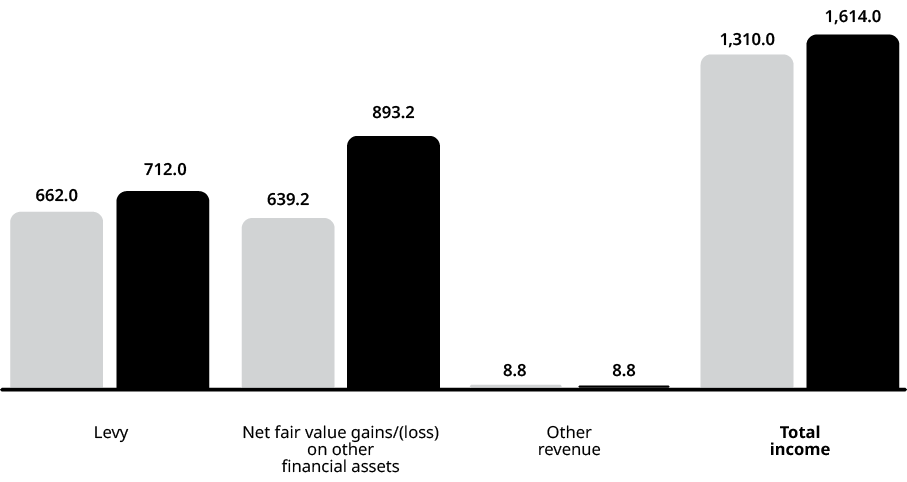
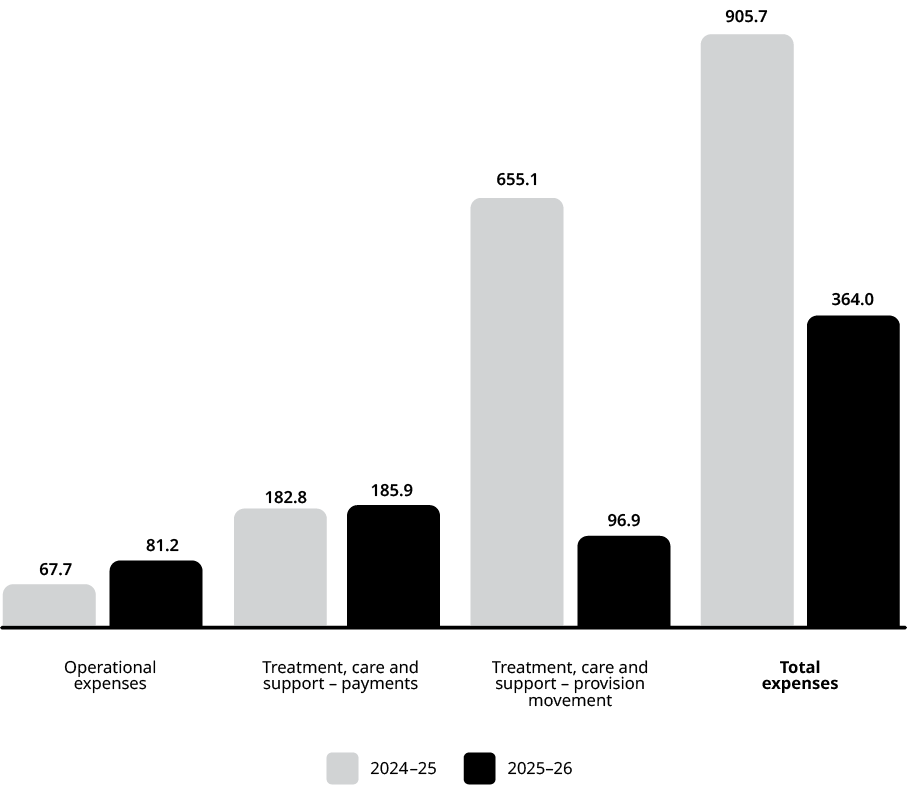
The NIISQ Agency reported an operating surplus of $1,250 million for the year ended 30 June 2026, compared with $404 million in 2024–25. This result reflected total income of $1,614 million and total expenses of $364 million.
Income was mainly derived from NIISQ levies and investment returns generated by the Queensland Investment Corporation. Levy income increased from $662 million to $712 million, reflecting growth in vehicle registrations and levy rates. Investment returns rose from $639 million to $893 million, driven by stronger equity market performance and growth in funds with increased funds under management.
Treatment, care and support costs were the Agency’s largest expense at $283 million. These costs were significantly lower than in the prior year, mainly due to one-off changes in actuarial assumptions and participant experience, resulting in a release of the associated provision.
Other operating expenses increased by $13 million, from $68 million to $81 million. The increase mainly comprised higher Queensland Investment Corporation management fees ($8 million), grant expenses ($2 million) and employee expenses ($2 million).
Income (millions)
Expenses (millions)
-
NIISQ Agency Annual Report 2025-26 Financial Statements (PDF, 1.6MB).
Appendices
-
Appendices (PDF, 529KB).
Last updated: September 2026