
Bringing the benefits of ballet to more Queenslanders: Exploring a new online program for Ballet for Brain Injury
July 9, 2026
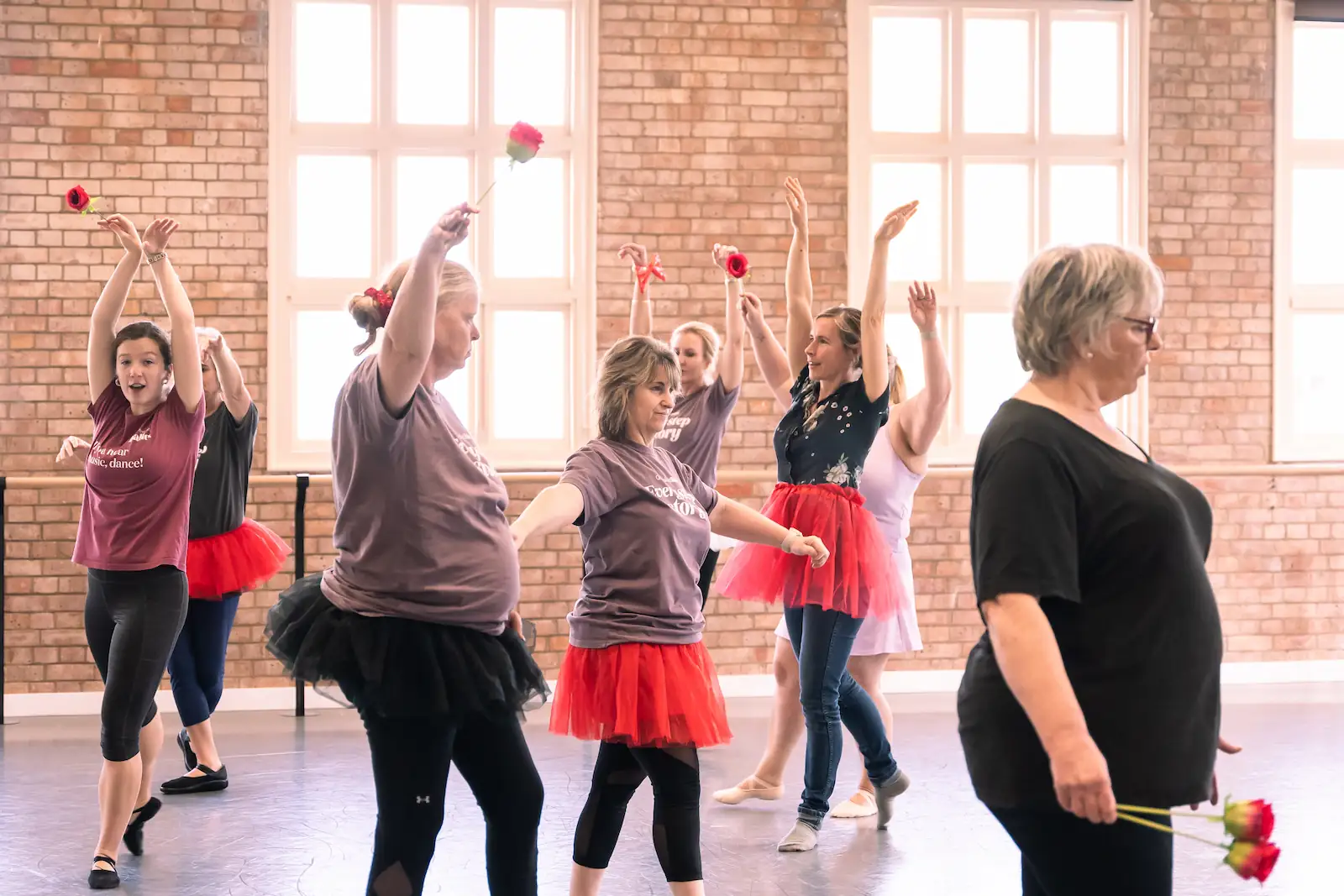
Photo credit: Jakob Perrett, Queensland Ballet
A unique partnership is set to expand access to a much-loved rehabilitation program, with a new TeleBrain trial exploring how Ballet for Brain Injury can be delivered online to people across regional and rural Queensland.
Funded by the National Injury Insurance Agency (NIISQ) and led by The University of Queensland’s RECOVER Injury Research Centre in partnership with the Queensland Ballet Community Health Institute, the project will investigate whether the benefits of this innovative program can be experienced from home through telehealth.
Originally developed in 2021, Ballet for Brain Injury was created in collaboration with the Hopkins Centre at Griffith University, the Queensland Conservatorium Research Centre, and Citrine Sun Entertainment as part of Queensland Ballet’s Dance for Health initiative. The program offers weekly classes for participants and their support carers to engage in a fun and healthy way to stay active.
It is a specialised dance program designed for people living with brain injury, including those recovering from traumatic brain injury, stroke and other neurological conditions. Traumatic brain injury accounts for the majority of NIISQ participants and can have lifelong impacts for individuals, their families and carers. Programs like Ballet for Brain Injury offer meaningful opportunities to support recovery, wellbeing and social connection.

NIISQ participant, Jason Driscoll, participant in the Ballet for Brain Injury program
Delivered by trained Queensland Ballet Teaching Artists, the program follows a ballet class structure but is carefully adapted to suit a range of abilities, with options for both seated and standing movement, and a strong emphasis on inclusive, creative participation.
Participants in the program have reported a range of benefits, including:
- improved balance, flexibility and coordination
- enhanced memory
- increased social connection and confidence
- opportunities for creative expression through movement, music and artistry
- a sense of pride and accomplishment from taking on new challenges
- enjoyment of physical activity as a fun and engaging way to stay active

Ally Champion, Dance Health Specialist and Teacher Artist delivering a walkthrough at our Queensland Brain Institute Collaborative (QBIC) Toowoomba roadshow 2024, demonstrating the option for seated movement.
By testing how these elements translate into an online environment, the trial aims to ensure that participants in regional and rural areas can experience the same sense of community and enjoyment that has made the program so successful in person.
NIISQ is proud to support this innovative work and is excited to see the results of the trial and its potential to improve access for Queenslanders living with brain injury.
Get Involved
For more information or to register your interest to participate in the pilot program please email
Ms Zara Gomes zgomes@queenslandballet.com.au
Dr Riley Brown riley.brown@uq.edu.au
Research Team telebraintrial@uq.edu.au
Last updated: July 2026